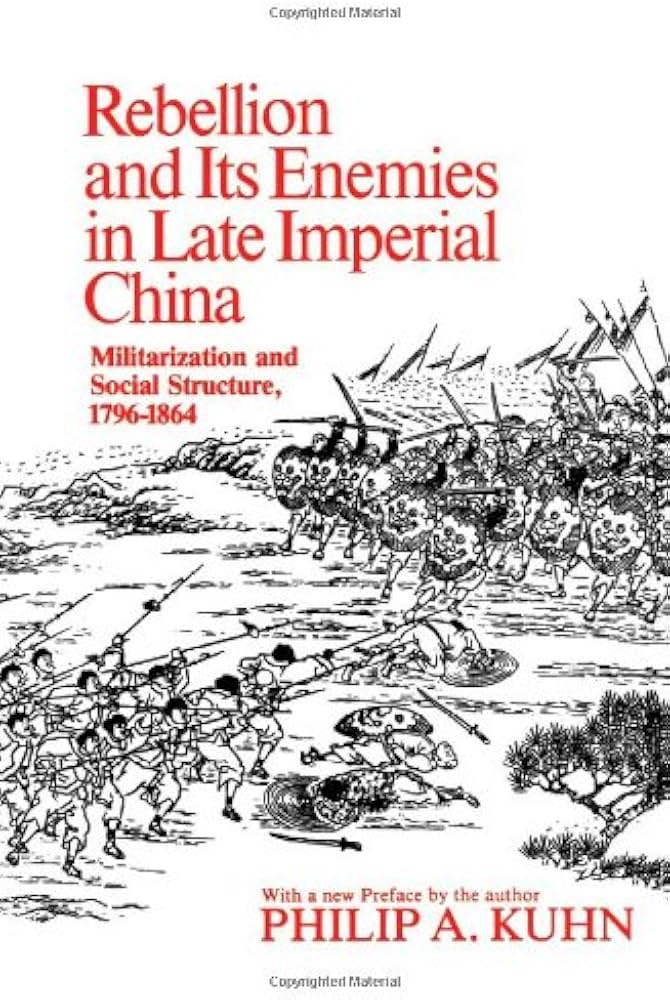
Rebellion and its Enemies in Late Imperial China: Militarization and Social Structure, 1796-1864
$18
$27
An academic military study of the process of local Chines orthodox and heterodox elites in the militarization of Chinese society during the tulmutuous nineteenth century. Orthodox elites here meaning the "scholar gentry" (those that held academic degrees and had significant influence in local affairs, but held no official post) and the "official gentry" (those that held official posts but served away from home). Heterodox elites include Triad groups (although mostly concerned with economics), bandit gangs and armed communities (ie. The Society of God-worshipers).Kuhn traces the emergence of these elites and their role in the "New Armies" that occurred in mid-century, back to the central government's reliance on local militia to put down the White Lotus Rebellion (1796). However, he stresses that between 1796-1864, this rise in the local orthodox elite's power (such as represented in the "tuan" and other regional military organizations) vis a vis the central authorities did not occur outside of the pre-existing patterns of organization, but instead exploited them to re-establish the traditional order in the regions distrupted by the multifarious events such as the White Lotus Rebellion, the Opium Wars and the Taiping Rebellion, that challenged the Qing's authority. Title: Rebellion and its Enemies in Late Imperial China: Militarization and Social Structure, 1796-1864 Author Name: Kuhn, Philip A Location Published: Harvard University Press: 1980 Binding: softcover Book Condition: Very Good Pages: 272 Categories: European Colonial Wars, Samurai and the Far East Seller ID: 2190